Thursday, 9 June 2016

More Nucs Needed

Something handy to have knocking about is a few Nucs or Nucleus Hives, small hives 2 to 8 frames wide to house smaller bee colonies. They've got a lot of uses I tend to use them to hive swarms, store spare Queens or even hatch spare Queen cells. I've made two already but as my number of hives has increased so has my need for support colonies and I want some free for swarm collection too, so I decided to make some more.

A friend nearby replaced her living room floor last year and gave me the spare floorboards. My plan was to make Nucs and brood boxes with them. First job was to attach the boards to each other. Floorboards have a tongue and groove so I decided to put some glue in there and clamp them whilst they cured. runing a bead of glue down the groove and one either side of the tongue I used a hammer to knock them together and a few gimp pins to temporarily hold them in place. I gave the glue a few days to cure before removing the clamps. After that it was onto the tablesaw to cut lengths the right width and remove the top tongue.

Glueing
Sawing


Cutting the tongues off the top of the floorboards I had a bit of a misshap. One of the thin offcuts got caught by a tooth on the spinning blade which propelled it forwards at an impressive turn of speed. The offcut went straight into the top of my left hand. It was a bit like being shot with an arrow, albeit one with a square profile and a jaggy mess instead of a pointy bit. Immediately concerned about my patio I grabbed bucket to catch the dripping claret whilst I had a think and checked the damage. Deciding I couldn't really work anymore that evening and noticing it was getting painful to close my hand and a large lump was growing under the puncture I thought a trip to A&E was probably the best course so grabbing some reading material and putting a carrier bag over my hand off I went. The Nurse Practitioner I saw turned out to be a beekeeper too. Anyway it was relatively good news, there was nothing broken in the hand. I'd nicked a vein and had a nice big haematoma developing which would dissipate with time. I popped back home to photograph the crime scene for posterity. A month later and a few rainfalls have done a great job of cleaning the patio, looking at the hand the puncture is barely visible but there's a hard little lump of scar tissue above the second and third metacarpal -pretty sure that'll break down eventually. Maybe I'll have a go at attaching a riving knife to the saw, maybe not.

Safety first
After a week or so I resumed work on the Nucs. Previously I've cut box joints when making nucs but this is really overkill as they won't be bearing much weight so glue and screws or even nails should be fine.I opted to use wood glue and six 40mm screws per corner, probably still more than needed really.

Nuc bodies. Going to need some excess glue scraping off later.
I decided to make Open Mesh Floors so I can check varroa drop if I want to but as the needs of a Nuc are different to a large colony I made the sliding bottom board fit in two postitions, one snug to the mesh so it's like a normal solid floor as far as the bees are concerned and one lower down to leave a cavity for mites to get stuck in when I want to check the drop. For the mesh I used sections cut from a piece I bought online from C. Wynne Jones. The correx bottom boards were cut from a fly tipped estate agent sign I found -I guess whoever bought the property wanted rid of the sign sooner than the estate agent wanted to go and collect it. Previously I've cut the entrance into the hive body but with these I made it part of the floor instead.

Making the floors.
The Nuc Roofs were made from chipboard I used the offcuts from the lengths of floorboard to make the sides. Initially I glued the roof sides and tacked them down with a few nails before drilling guide holes and putting screws in. Roof sides take a bit of hammer being used to pick up the roof and support things placed on top of them. A 22mm batton went around the inside of the roof to leave a space above the crownboard.

Nearly finished.

They were finished with roofing felt. I've found roofing felt difficult to use before but this time I scored the underside of the felt and ran a blowtorch over the corners to soften them before folding and nailing them. Seemed to work. The crownboards are just plywood with a rim glued and nailed in place and a feeding hole cut in the middle, each Nuc also has a little ply square that lives above the crownboard to cover or reduce the hole when they're not being fed.

Two Commercial Nucs.
I gave them a coat of green Shed & Fence paint, then drilled a couple of holes in the sides of the roof and slid some spare mesh up beneath the felt for ventilation. I later added wire clips to hold the floor and body together too to make carrying easier. Two more 5 frame Nucs added to the inventory. They were populated with bees the afternoon they were finished.


Saturday, 4 June 2016

Swarm Lures and Awkward Bees

A couple of my colonies have been very swarmy of late. I suspect part of the problem is the swarms I caught last year are from stocks with a predisposition for swarming -in hindsight the fact they'ed swarmed for me to catch in the first place could've been a clue as to what to expect from them. The huge swarm I caught in July had been doing really well, raising a strong colony and filling Supers but a couple of weeks ago one morning the queen absconded taking a large contingent of workers with her leaving a supersedure cell and no swarm cells oddly enough. A couple of weeks ago a cast swarm went and sat in a neighbours fruit bush too and last weekend I collected a swarm from a fruit tree near my apiary. Not sure who's they were but the queen was marked blue so they've obviously slipped past someone's swarm control. As well as the usual weekly inspections and swarm control I decided to put out a bait hive and put swarm lure on a post so any swarms they managed to get by wouldn't go far. Looking on eBay for swarm lures I opted for the cheapest seller who's stock was in the UK and ordered 10 lures for £8.49 from someone uktrader2011. They seem to sell a lot of body piercing stuff as well as swarm lures and the text in the advert suggests the seller uses this stuff themselves and linked to a couple of videos of the seller showing the stuff in use. Good enough for me. Take my money!.

Swarm lures, store them carefully.

The lures came in little test tube things individually sealed in a plastic strip. I'm not sure what it's made of but it smells pleasant, whatever it is I think there's a little lemongrass oil in the mix. As well as the lure I decided to attach a box to a post to act as a bait hive too. I had a large polystyrene vegetable I'd found outside a supermarket knocking about in the shed and it was time I found a use for the thing. I cut a little hole in it then gave it a coat of water based masonry paint to protect it from sunlight and rain and strapped it to a post. I scribbled Swarm Trap on one side and marked the front with an arrow to the entrance for the benefit of anyone stumbling across it. Not sure if it'll work or not really as it might be a bit bright in there, usually a Bait Hive is an actual empty hive tucked out of the way somewhere or a big wooden box hung up a tree. I wiped some of the swarm attractant on a bit of wood, slung it in the box and wiped some more attractant on the post, the little test tube I also wired to the post. Whilst handling the lure I used disposeable nitrile gloves, you don't want to be walking about with swarm attractant on you.

Use the entrance. Can't you read?.

Two days later there was a large swarm on the post. The tube on it's bit of wire will have been in the centre of the cluster. The post was too firmly fixed to the gound for me to shake the bees off it but it looked simple enough to remove the box hold a Nuc underneath and brush them into it. Simple stuff. Unfortunately the bees had other ideas. I got about half of them into the box and the rest took flight. Popping the box on the ground for the fliers to join their sisters I started inspecting my hives. It would be very easy to see which colony had lost a swarm that size but my colonies were all intact. This swarm must've been drawn by the scent of the lure as they absconded from another apiary. I believe there's at least 6 other apiaries within a mile of this one so it's not too surprising although I'm wondering how strong this lure is and is every swarm in the city going to be heading to my post? Whatever the swarm lure's made from it certainly seems to work anyway. After ascertaining I wasn't missing any bees I found the actual swarm itself was now missing. Instead of the fliers and stragglers joining their sisters in the box those that were in had gone back the others and they'ed flown off. Not too far though. They were in a gooseberry bush. I gave them some time to form a cluster again then carefully made my way to them armed with my Nuc. Removing three of the five frames I held it under the cluster so close the cluster were half way into the box already then shook them into the box replaced the three frames and put the crownboard most of the way on leaving one end open a bit to help the stragglers get in. That should've been it really but instead they took flight again. This time moving into a very tangled collection of bushes.

Thirds resting place, wont be brushing or shaking anything out of there.

There was no way I could shake them out of that mass of twigs and plants. At this point I was thinking whoever had lost these bees was probably glad to see the back of them, and wondering if I really wanted such an awkward colony in my apiary at all. Still I had to get them in the box... Evidently they needed more incentive to stay in it so I swapped one of the new frames of foundation for a grotty looking frame of dark comb I'd earmarked for rendering and replacement. I also threw in the tube of swarm lure. Pushing the Nuc as far into the bush as I could without dislodging the bees I used some tin snips to cut away at the gantry of twigs, stalks, sticks and branches running through the cluster. As I went I removed the little offcuts one at a time placing them on the Nuc floor without dislodging their bee passengers. As the space in the Nuc slowly filled with twigs and leaves I noted bees weren't leaving it yet. Eventually I was able to bend the last couple  of branches into the Nuc and put the lid partway on leaving a space for the foliage and hopefully for bees to enter the box.

Doing as they're told at last.
It'd taken two hours to get to this point but eventually I was able to see workers Nosanoving to tell the other bees this was their home. Lifting one side of the crownbord I was able to pullout the twigs and so on and slip in the remaining frames without them traking flight again. I gave them another half hour to get in then took the box back to my apiary, sat it on top of another hive with the entrance pointing  the other way and soon saw bees Nosanoving at the entrance as flying bees went to join them. I'll leave them alone for a week or two before seeing how they're doing in there.

Stragglers going to join their sisters

Having checked the other hives I could see none are preparing to swarm at the moment, however with a period of  good weather predicted I'm expecting a few more passing swarms to be drawn to my baited post now. I dare say there may even be more from the colony today's awkward swarm had issued from too ..something to look forwards to there.

Thursday, 2 June 2016

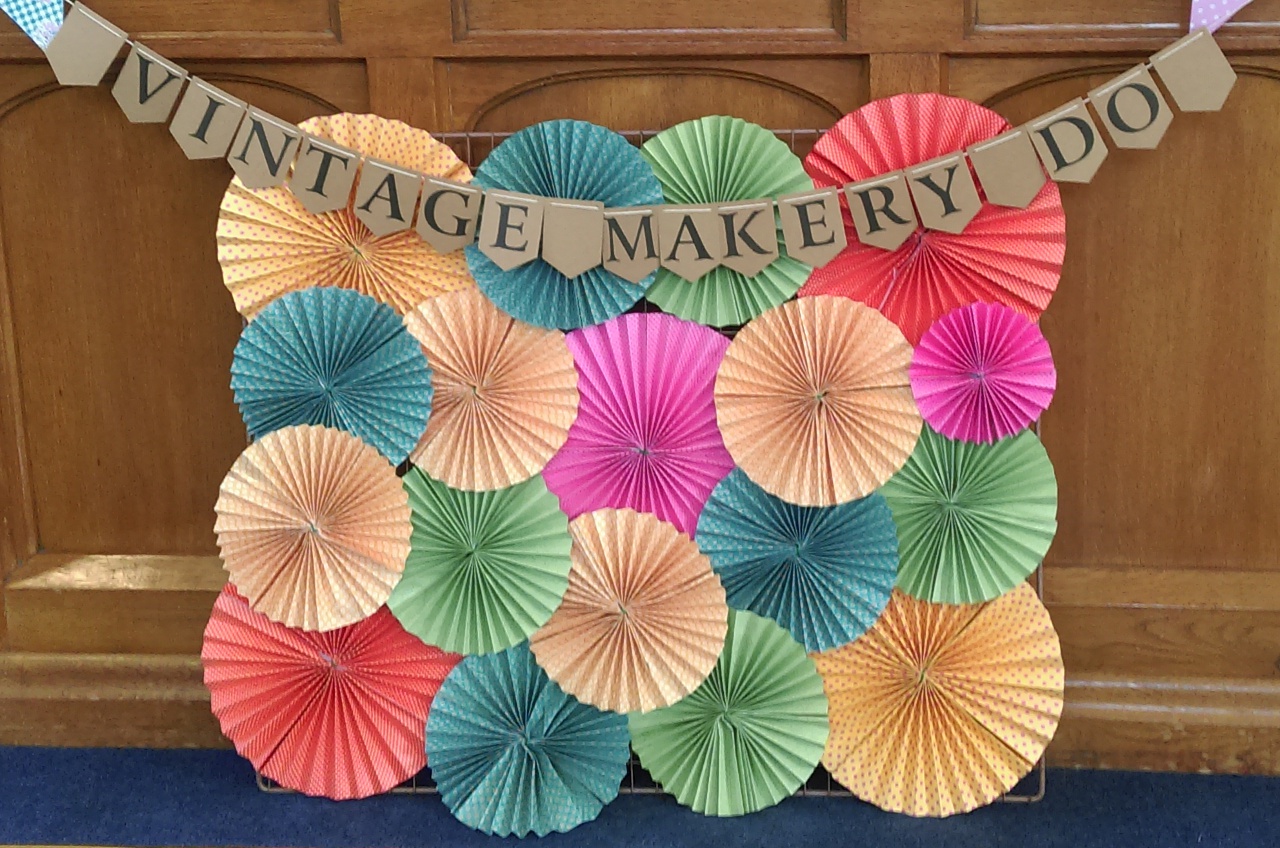
Vintage Makery Do II

Not been posting much recently -been pretty busy with bees really. Some of my stock seem very swarmy and I'm thinking it's possibly due to the swarms I captured last year. Next time I catch swarms I'll possibly requeen them as soon as they're settled. Anyway on Saturday 7th May 2016 was the second Vintage Makery Do organised once again by the top notch Vintage Cafe on Chanterlands Avenue -the place for gluten free cake!.

As before it was in St Ninian's Church on Chanterlands Avenue. When I rolled up to set up my table the weather was warm and there was one of those vintage ice cream reverse tricycles outside selling gelato from Bellissima Delights. I planned to visit that later but didn't get round to it, shall have to watch out for it elsewhere in the city. Last time we'd

Looks like the right place
I've taken to using fruit crates to carrying my stuff about in. They're very robust and it turns out larger shops and supermarkets just dump them on the pavement till whenever they get picked up -handy to know if you're ever moving house.  I'd brought along Clear Honey, Set Honey, Lip Balm, Beeswax Polish and Propolis Salve. I had meant to bring Propolis Tincture too but seem to have forgotten that. I also brought along a Super full of drawn comb -one I'd let the bees clean up so it was dry. As well as providing a visual it was handy to help with explanations when people asked questions about the bees. To finish filling the table out I stuck a bee smoker in a corner of the table, the little one I got at the auction last month. Looking at the late Dave Cushman's encyclopaedic beekeeping site he identifies this style of smoker as having been made in England in the early twentieth century, there could be an antique under that red paint.

Made by the Bees and Me

To my left was A. Cockerill a chap who makes bespoke furniture. Well he seemed to make pretty much everything really, from egg cups and plates, to pens, tables, cupboards, cabinets and boxes and even the workbench and vice he used. The workbench looked like something out of Skyrim and was clearly more solid than my Work Mate.


Some of the same vendors were there as the previous one including Koh-Koh Chocolates which now has it's own website. Actually I bought a box of his wares just before things started, can definitely recommend them.

Some of the handmade items from Koh-Koh Chocolate

There was an interesting display from Uncouth Arts who had some textured pictures, sculpture and I think jewellery -I didn't get a photo but you can to visit the Facebook page for a look. Near to me was Granny's Toybox with a table full of hand knitted toys, painted decorations, candles and curios.

Hand painted items from Granny's Toybox
Once customers started wandering in it got pretty busy, sales went so well I ran out of change a couple of times, at one point gave a discounted tin of lip balm in lieu of coinage. When there was a lull I nipped over to A Cockerill's table and bought myself a wooden egg cup -I've kept chickens for years, it was about time I got a smart egg cup.As well as promoting local businesses the event was also to support charity. In total it raised £120 for Hull Animal Welfare so success all round!

Monday, 2 May 2016

2016 Beverley Beekeepers' Annual Auction

30th of April is Reunification Day in Vietnam, closer to home this year it was also the Beverley Beekeepers Association Annual Auction. Previously the auction has taken place on the last Sunday in April, this year it was on the last Saturday. As per usual it was in Woodmansey Village Hall, last time I was there it was for a couple of friends' wedding reception -there was more alcohol and less bee stuff that time.

In a major departure from my usual Saturday routine I got up bright and early. Normally I don't see Saturday mornings, glancing out of the window I was met by a warm sunny day and and the sight of a suspiciously well fed pigeon picking grass seeds from my very recently reseeded lawn. After a feeding the cats, checking Facebook, checking Instagram and getting a coffee I decided this year I'd try flogging a couple of nucs. I've got three National Nucs from previous bee purchases and as I use Commercial brood boxes they're very little use to me. One's on top of an outbuilding as a bait hive but the only things attracted to it seems to be spiders the size of your hand, I decided to leave it up there for now. The other two Nucs I scorched and scraped. I found that the ply of one was delaminating so it probably wasn't really sellable so decided to leave it. Finally armed with my chequebook and the one good, spider free, Nuc I set of for Woodmansey. I didn't need anything in particular this year but was hoping to pick up a travel screen as I now have bees in two locations.

When I rolled up there was a row of brand new National Hives outside the Hall and in the field behind the bee colonies were lined up behind a rope. Inside the hall there was 8 rows of wares ranging from bee hives to boilers.

Three of the many National Hives on offer
Feeders, a Wax Melter, Hives, Petunias, you name it it was probably there.
My Nuc was the last item submitted for selling. If I'd been serious about selling some kit rather than just clearing a little shed space I'd've arrived sooner to get my items placed earlier in the auction schedule when there's more people bidding. .

First thing I looked at was the little selection of beekeeping books. One that was pointed out to me was a nondescript looking book with a handwritten replacement cover. Turns out it  was a 1952 first edition of The Pollen Loads of the Honeybee by Dorothy Hodges.
A colour plate from The Pollen Loads of the Honeybee

Pollen chart
The book had some amazing illustrations and colour plates, at the back a chart of pollen colours which rather than having been printed into the book was made up of small rectangles of each colour glued onto the page. It didn't meet it's reserve so it's original owner still has it, and I think it may actually be part of the Beverley Beekeepers' Association Library. If you have £100 burning a hole in your pocket there's some later reprints of the book on Amazon at the moment.

Unlike previous years all the hives were National, previously there's been WBC, Smith and Commercial hives and components when I've been  but this year it looks like people have settled on a standard. I'd've liked to have seen some Commercial size Nucs myself, think I'll be making my own this summer. Last year if I remember rightly it was almost all National except for one Commercial Brood Box. Something I did notice was more Polystyrene than previously. Looking on the forums it looks like most still prefer to use wood but there's some suggestion Polystyrene may be better for over wintering due to it's insulating properties -although nobody seems to be mentioning that poly hives tend to have thicker sides than their wood counterparts.

Unused, painted, complete Poly Hive

Poly Nucs with built in feeders
Three display hives all sold, perfect for anyone who wants a bee colony in their living room. Boxes of Apiguard dated 2018 were going for £16 a pop, saving buyers about a fiver and postage costs. There always seems to be a honey creamer at these auctions, this time it sold for £9 -looked like a Thorn one.

A couple of the Display Hives that were on offer

The majority of kit for sale this year was new rather than used

Random bits
There's usually a few boxes of random used bits, whilst there were some this year there were also quite a few lots of mixed brand new kit like a pair of gauntlets and two hive tools packaged together. There was a range of extractors, some powered some manual and a cage to convert an existing extractor for radial to tangenital. One buyer picked up a plastic 4 frame Extractor for £40.

Extractors, powered or manual
Some bright spark seems to have started painting old smokers, should make them a little harder to lose in long grass for those with outapiaries. There were also a lot of new smokers and a few smoker bellows. I bid on a couple of bellows but didn't win, eventually I bagged a red painted mini smoker for 50p. Just the thing when you only need to open one hive, that it looks like a rocket from a fifties sci-fi comic is just a bonus.

Smokers of all ages, some painted.
I picked up the little red one.

There were a few boilers dotted about the place. Not something you'd initially associate with beekeeping but useful things. I picked one up a few years ago intending to use it to clean frames but now use it for making gallons of syrup, other things people use them for include wax extraction and mead making. I think the Burco went for £8.

Tea or coffee, by the gallon.
The strangest thing at the auction was probably a Servis Extraspin 503. This is a device for drying clothes by spinning them at high speeds. I did wonder what it was doing there but there was helpful note attached advising that it makes a very good heather honey extractor. It looked new to my untrained eye and there was a lot of competition for it and eventually it sold for £54.

Great for drying clothing or extracting Heather Honey

Moving outside there were, I think, 19 colonies in total. Mostly they were in full size brood boxes with a only a few in 5 or 6 frame Nucs, towards the end there were some 12 frame double poly nucs. The bee prices were unpredictable as ever. A 5 frame Nuc with a 2015 Queen went for £130 another for £110. At this point it was getting a little nippy so I popped back inside to get my hoody, when I came back there a populated National brood box being auctioned and the bidding was at £90. I hadn't really planned to buy any bees on the day and hadn't actually heard the details of the colony but as it seemed to be going so cheaply I thought I'd put in a couple of bids. I got them for £110 which is less than any of the three Nucs I've bought previously. Later turned out what I'd got for my money was 10 frames of bees and 6 frames of brood with a 2015 Queen. Bargain.

Bees for sale, about 5 workers for a penny.

In previous years people have stood up to the rope but this time the bees were a little feisty so most folk were stood back, except one chap seemed happy to let a bee sit on his forehead till it lost interest. I think allthe bees sold with the double Nucs fetching £160 apiece. Shortly after the bee auction it started raining heavily, which is possibly why the bees were a little unhappy.

Back inside about 20 boxes of jars and lids were quickly auctioned off. I picked up a big sack of 65mm jar lids on the off chance they'd fit some jars I have -they didn't so they'll probably go on eBay at some point. Noteable bargains, other than the bees, were a guy from Goole who got a honey warming cabinet made from a converted fridge for £1 and someone else bagging 50 DN4 frames for £25. I got my Travel Screen for £1. There were a few plants for sale but they didn't generate much interest, a few trays of Petunia's failed to sell and I got 12 pots of Chives for £2. I unsuccessfully bid on some Snelgrove type boards but lost out, think there was two lots of two. I'll have to make some more this summer.

£5 went a long way
There were a few bags of bee accessories and I picked up the last one for a fiver. It contained two rapid feeders, a hive tool, two porter escapes, a queen clip, queen cage and blue queen marking pen. I'll probably not use the porter escapes (does anyone?) but the pen will be used for a couple of unmarked Queens from last year and the rest I've already got a use for.

One Handed Queen Catcher
For £3 I got a "One Handed Queen Catcher". This is a clever  device from Korean company Yasaeng Beeking Supplies. Who hasn't heard of them, right? Anyway in case the name didn't give it away, it's a device for catching a Queen bee and marking her. Usually you use a Queen clip to catch her, then transfer her to a marking cage, the transfer is a little risky and can lead to a Queen flapping away. TBH all queen catchers are one handed really so perhaps something got lost in translation, anyway having the two devices combined should make things easier and reduce lost Queens -yes I've had one fly off during transfer from clip to cage..


Other gubbins I picked up were some small over trousers -they were thrown in with the smoker I bought, an icing sugar dusting screen, a Thornes English Feeder and a stainless steel uncapping tray which had previously belonged to Preston Honey going by the sign thrown in with it.

I also picked up a copy of Maurice Marterlinck's The Life of the Bee translated by Alfred Sutro and published by George Allen & Unwin. It was originally penned in 1901, I'm not sure what year this copy was published but the last date listed was 1912 and a previous owner, one W.D. Holmes, wrote their name in it in 1941. Beekeeping has changed a lot since 1901, the Varroa Mite wasn't here, neither was American Foul Brood, Tracheal Mite hadn't raised it's head, our bees were black, farming practices and land management was totally different too but I think it should be an interesting read.

The blackened travel screen in the middle was just what I was looking for
As well as buying the Travel Screen I'd been hoping for it turned out the colony I bought also had an identical one included with the hive so one to keep at home and one for the outapiary too, once I've given them a good clean and sterilised them. I drove the bees straight to the out apiary, according to Google maps the guy they were bought from lives 2 miles as the bee flies from my apiary. I don't want them flying back to him so I've left them with some grass blocking the hive entrance. My plan was to remove it in three days time but by Monday evening they'ed done it themselves anyway and foragers were returning to the right place.


Saturday, 23 April 2016

Beverley Beekeepers' Annual Auction is Approaching

Almost time for the Beverley Beekeepers' Association Annual Auction. It's on Saturday 30th April, 2016 at Woodmansey Village Hall, parking is onsite. I plan to get there on time this year. There was a lot of competition for colonies in 5 frame nucs which were in short supply last year. With that and my recent Winter losses in mind I'm interested to see if that prompts more people to bring Nucs to this years event.

Bees and pretty much everything bee related, also tea and coffee.

Friday, 22 April 2016

A Warm Winter and a Cold Spring

The season is off to a slow start. With the blurry transition from Winter to Spring we're getting a few days of tshirt weather and a few nearly freezing nights. Actually the National Bee Unit recently sent out an advisory email warning of high varroa levels and low food stores but mine seem to have plenty of food left. Varroa levels are high this year because of the mild Winter. Beekeepers tend to treat the bees for varroa in Winter when there's no brood for the mites to hide in the comb with leaving the mites vulnerable but as last Winter was warm (as Winter goes) many hives had brood so the Varroa weren't exposed to the treatment -that or it simply wasn't cold enough for long enough for beekeepers to use Oxalic acid. Food stores are low in some colonies because spring was so cold and bees haven't been able to forage. Warm winter, cold spring. Bad combination.

Firing up the smoker
I treated the bees for mites with Oxalic acid in February this year, it's likely there may have been some brood in the hives so I may need to do a different varroa treatment at some point. This week when we had a warm day I decided to give the bees a quick inspection. Apart from the colony that died out two other colonies had shrunk considerably so I moved them into nucleus hives so they have less space to try and keep warm. This has left me with a lot of spare frames of stored syrup which I'm not entirely sure what to do with. I suspect they'll probably be fine to keep for a long time in case I need to feed a colony up though -although it'd be bad practice to move them between apiaries.

Isolation Starvation

This is a photo of the colony that died. The very last remains of the cluster are over on the right of the comb where they died, over on the left of the frame you can see capped food stores which would've kept them alive if they'ed been able to reach. In the middle you can also see some capped brood they'ed been raising before it got too cold. They also had whole frames of food stores left in the hive towards the ends. For now I've blocked the entrance to the hive and left it sat in place. With the entrance open the other colonies would rob it out. The previous two Winters I've put candy boards on the hives but this year decided not to as a bit of an experiment -I don't think many beekeepers in the UK use Candy boards really. Think I'll probably make them a regular part of my Winter routine.


A developing Drone the workers have removed

On the stronger hives I swapped out the floors for clean ones to remove the last of dead bees left in the hives. One colony has a lot of brood already and had started raising Drones. Examining their hive floor there was the usual dead workers, bits of pollen what looks like wax scales and a large pale drone larva that had been pulled from the comb part way through its metamorphosis. I have no idea why the workers had decided to cull him but as they'ed only pulled one I decided not to lose any sleep over it. Drones come from haploid eggs meaning they only have half the chromosomes of a female bee. This means recessive genes are expressed whereas with a diploid egg there may be a dominant gene so mutations amongst male bees are more common than female. My guess is some sort of genetic mutation in this drone caused the females to cull him. Over the years I've seen a couple of red eyed drones before and once a white eyed drone, if there's a lot of mutation though it may mean changing the queen.


Coccinella septempunctata, the larger one is probably the female.
 It's not just the honey bees gearing up for the Spring. I spotted a pair of Seven Spot Ladybirds in deep conversation taking in the sunlight. Fascinating ladybird fact: Some ladybird species mate for up to 9 hours. Who'd've thought it?

Bumble Bee foraging from a Dandelion
Dandelions are in full flower at the moment providing a nectar source for social and solitary bees. Gardeners tend to combat Dandelions but they're a useful early food source for pollinators.

Wednesday, 23 March 2016

Spring Time and Winter Losses

Quick entry as we're into spring. On the 20th March Google told us it was Vernal Equinox. That's the first day of Spring. Sort of. If you use the Astronomical Calendar 20th of March is the first day of Spring, but if you use the Meteorological Calendar it started on 1st March. The Astronomical Calendar is based upon the angle of the Earth relative to it's orbit of the sun whereas the Meteorological Calendar is based upon the weather -yep there's clues in the names I know. Today whichever calendar you prefer to use we're definitely in Spring.

Toby sat on a hive

Going into Winter I had 6 colonies, unfortunately one didn't make it through. Well actually they did make it through to early March but seem to have died off during March despite having plenty of food. It's been a strange month with the weather being a car crash mish mash of tshirt weather one day and freezing the next. Last week I'd listened to the hives with a stethoscope and noticed no noise from one hive. After waiting for a warm day I had a look inside and was disappointed to find no bees responding to the intrusion. I had a quick look through the frames and found that although there was still plenty of food stores in the hive the bees had perished clustered away from it. I think this had been my smallest colony going into winter and the cold snap in March seems to have thrown them. They'ed even started rearing brood at some point. This is the second colony I've lost to Winter in 5 years. For a beginner beekeeper that's pretty good but it's still quite annoying. It's still too cold to be inspecting colonies but after hefting the hives (lifting the side to check the weight) I decided to give two of them some fondant to gnaw on.

Other bees have been flying too. Yesterday I spotted a large Bumble Bee foraging the flowers. I don't know what type of Bumble Bee she was but given the timing and her size she had to be a Queen -it's too early for Workers and Drones.

Queen Bumble out foraging
Frog activity is usually a good sign things are warming up too. Last week I took a female frog off Toby the Cat and noticed she seemed rather plump, I figured she was probably heavy with eggs and this week the presence of frogspawn in the ponds at home and my out apiary was clear evidence the amorous amphibians had deemed it warm enough to do rude things in public. They don't always get it right though and they've spawned before freezing spells in the past, fingers crossed they got it right this time.

Frogspawn is appearing
Some March days my bees have been flying and I'd already spotted some bringing in pollen which suggests they were raising brood. They've also been seen gathering water from a couple of locations. Today there was a few heading to a neighbours waterlogged trough (a galvanised planter with no drainage hole) and apparently sucking up water from the mud. Probably far safer than using the currently frog infested ponds.

Gathering water from a trough of mud.
This makes me think that perhaps instead of making a regular pond or water feature maybe an artificial boggy area may be a better as a water source for them. Just a hole in the ground, lined with pond liner, backfilled with lose soil and waterlogged. It's an idea I'll possibly revisit later in the year. Speaking of mud..

Ground Beetle Larva
-some sort of Carabidae
I met a Ground Beetle Larva the other day. It's not really bee related but I liked the photo. These things are pretty useful for gardeners as they eat slugs so if you find one best to leave it alone to protect your plants, potatoes or whatever. Not all larvae are predators but you don't need a degree in entomology to figure out which ones are useful, those large jaws are a dead giveaway that this is a predator.